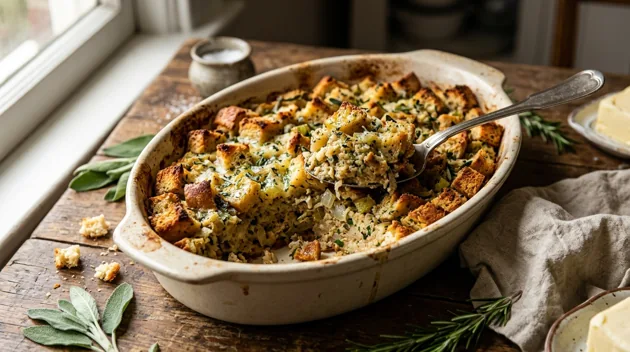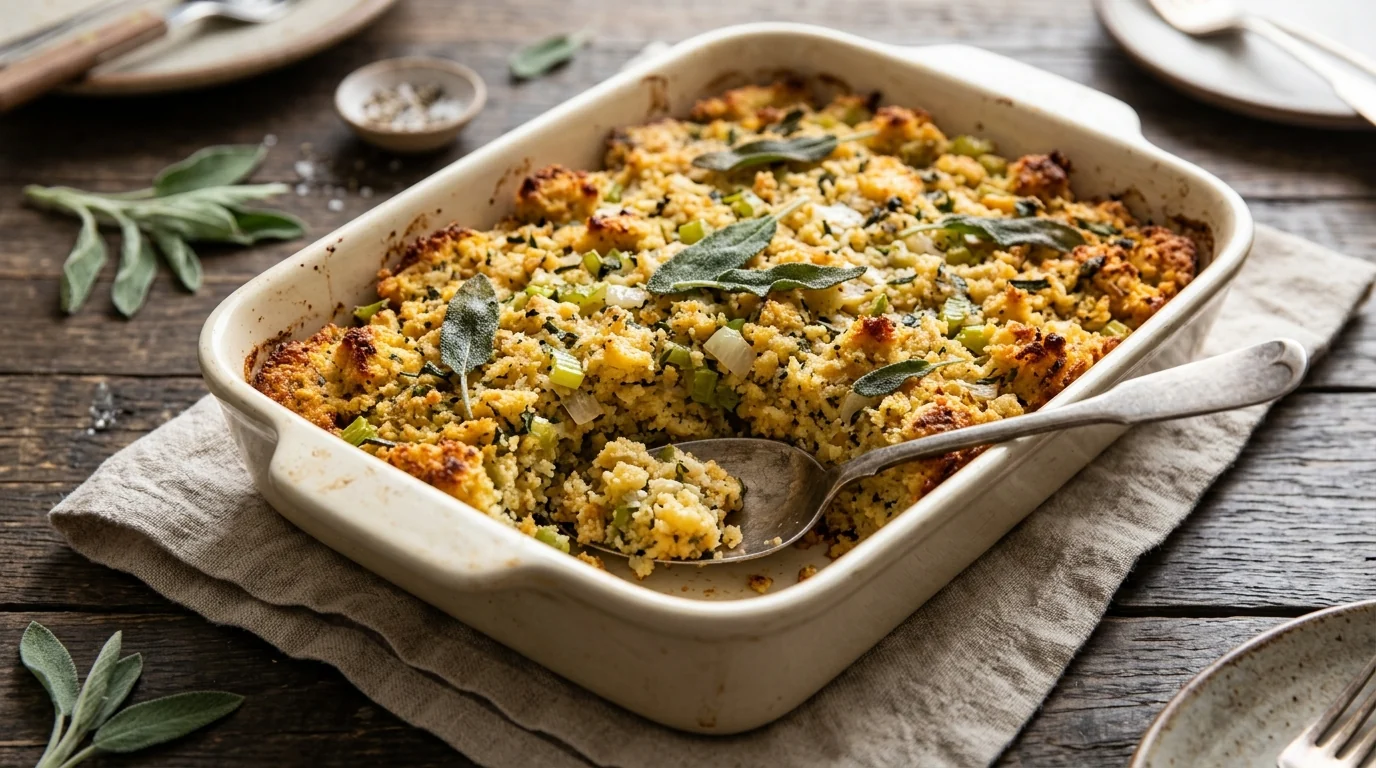
Cornbread dressing is one of those holiday sides where moisture matters more than fancy ingredients. Day-old cornbread, celery, onion, sage, and enough broth make a tender interior beneath a lightly crisp crust.
Rather than relying on a long list of special ingredients, this approach pays attention to the details that matter: stale cornbread absorbs liquid without dissolving into paste. The recipe below gives a practical ingredient list, a clear cooking sequence, and the small adjustments that help it work in a real home kitchen.
The cooking idea behind Classic Cornbread Dressing
Stale cornbread absorbs liquid without dissolving into paste. Vegetables taste most vivid when their natural sweetness or bitterness is respected. Control their water first: drying produce, blanching briefly or choosing an appropriately hot pan helps flavors concentrate instead of washing away. For classic cornbread dressing, that principle guides the steps that follow.
Keep an eye on the moisture: mixture should be damp throughout, not soupy. That is especially relevant here because the way you handle the ingredients before the final cooking stage affects both flavor and texture. Read through the method once before beginning so you can anticipate the moments that need attention.
Ingredients for Classic Cornbread Dressing
For classic cornbread dressing, these are the quantities for one home-kitchen batch. Measure everything before you start, especially 8 cups crumbled day-old cornbread. A different grain, flour, cut of meat or dairy product may change the result, so use the listed measurements on the first attempt.
- 8 cups crumbled day-old cornbread
- 4 tbsp butter
- 1 large onion, finely diced
- 3 celery stalks, diced
- 2 tbsp chopped sage
- 1 tbsp thyme leaves
- 2 eggs
- 2–3 cups chicken or vegetable broth
- 1 tsp salt
- 1/2 tsp black pepper
Choosing and preparing the ingredients
8 cups crumbled day-old cornbread: Produce quality matters here: choose pieces that are firm, fragrant and free of spoilage. Wash and dry as needed, especially before roasting or sautéing. For classic cornbread dressing, this ingredient joins 4 tbsp butter in the final balance.
4 tbsp butter: Fat carries flavor and helps with browning. If using butter over sustained heat, watch for dark flecks and lower the flame before they turn bitter. For classic cornbread dressing, this ingredient joins 1 large onion in the final balance.
1 large onion: Give onions time to soften properly. When a recipe calls for golden onions, patient moderate heat builds a sweetness you cannot get from a brief high-heat sauté. For classic cornbread dressing, this ingredient joins 3 celery stalks in the final balance.
3 celery stalks: Measure this ingredient before cooking begins. Having the full quantity ready makes each stage more relaxed and reduces the chance of skipping it during a busy moment. For classic cornbread dressing, this ingredient joins 2 tbsp chopped sage in the final balance.
2 tbsp chopped sage: Fresh herbs bring aroma as much as flavor. Woody herbs withstand longer cooking, while delicate leafy herbs are best saved for finishing when possible. For classic cornbread dressing, this ingredient joins 1 tbsp thyme leaves in the final balance.
1 tbsp thyme leaves: Fresh herbs bring aroma as much as flavor. Woody herbs withstand longer cooking, while delicate leafy herbs are best saved for finishing when possible. For classic cornbread dressing, this ingredient joins 2 eggs in the final balance.
2 eggs: Eggs help mixtures bind or custards set. Incorporate them without overbeating, and pay attention to the suggested oven temperature to avoid tough, rubbery results. For classic cornbread dressing, this ingredient joins 2–3 cups chicken or vegetable broth in the final balance.
2–3 cups chicken or vegetable broth: Chicken and turkey are best handled cold and returned to the refrigerator promptly; if using previously cooked meat, keep it covered until it is folded into the dish. For classic cornbread dressing, this ingredient joins 1 tsp salt in the final balance.
1 tsp salt: Seasoning should support the main ingredient rather than conceal it. Taste savory preparations before serving and add delicate spices with a light hand. For classic cornbread dressing, this ingredient joins 1/2 tsp black pepper in the final balance.
1/2 tsp black pepper: Seasoning should support the main ingredient rather than conceal it. Taste savory preparations before serving and add delicate spices with a light hand. For classic cornbread dressing, this ingredient joins 8 cups crumbled day-old cornbread in the final balance.
How to make Classic Cornbread Dressing
Have the pan or pot ready and ingredients prepared in the order used for classic cornbread dressing. The first instruction is to heat oven to 350°F and butter a 9-by-13-inch baking dish. Work through the stages without rushing; careful mixing, browning or resting will often matter more than saving a minute.
- 1
Heat oven to 350°F and butter a 9-by-13-inch baking dish.
Allow the oven time to reach its set temperature before the pan goes in; an oven that is still warming changes both the browning and the timing. Position the rack so there is room above the dish and check that your baking vessel suits the heat. Notice this change carefully in classic cornbread dressing with celery and fresh sage before you sauté onion and celery in butter until soft but not browned.
- 2
Sauté onion and celery in butter until soft but not browned.
Listen for a steady sizzle rather than violent sputtering. Color develops when surface moisture cooks away, so resist stirring or turning continuously. Work in batches if the ingredients would otherwise cover the skillet in a thick layer. In classic cornbread dressing with celery and fresh sage, the next move is to toss cornbread with vegetables; keeping the order steady helps.
- 3
Toss cornbread with vegetables, sage, thyme, salt and pepper.
Move to the next stage only after checking how the ingredients look and feel. Keep the pan at a controlled heat, notice changes in aroma or texture, and adjust gently rather than trying to rush the process. For classic cornbread dressing with celery and fresh sage, this stage sets up the next task: beat eggs with 2 cups broth and fold gently into cornbread.
- 4
Beat eggs with 2 cups broth and fold gently into cornbread, adding more broth if dry.
Gather everything before combining it, particularly any ingredients that change texture when they sit. Work just until the mixture is even unless the instructions specifically call for kneading or extended beating; overworking delicate mixtures can make the result heavy. With classic cornbread dressing with celery and fresh sage, the sequence matters because you will soon need to spread in dish and bake 35–45 minutes until center is set and top lightly crisp.
- 5
Spread in dish and bake 35–45 minutes until center is set and top lightly crisp.
Treat the suggested time as a checkpoint, not an automatic finish line. The important question is whether the center has reached the intended texture or safe temperature. If only the top is coloring, cover loosely and allow the interior more time. For classic cornbread dressing with celery and fresh sage, check this before moving on to rest 10 minutes before serving.
- 6
Rest 10 minutes before serving.
This pause changes how the dish serves: juices redistribute, starches settle, and hot fillings become less runny. Keep an eye on safe food handling and transfer perishables to refrigeration promptly rather than leaving them on the counter for extended periods. A final reminder for classic cornbread dressing with celery and fresh sage: keep an eye on the moisture: mixture should be damp throughout, not soupy.
What to look for as it cooks
Season at the end as well as the beginning; a squeeze of acid or fresh herb often sharpens the whole dish. Stop cooking when the center is tender but the vegetable still has character. This matters particularly for classic cornbread dressing, where keep an eye on the moisture: mixture should be damp throughout, not soupy.
Stale cornbread absorbs liquid without dissolving into paste. When deciding whether to move on, use smell, texture and appearance in combination with a thermometer for cooked meats. Note how the surface changes as moisture evaporates: a little concentrated flavor is welcome, but darkening too rapidly is a cue to lower the heat or shield the pan.
An organized cooking-day plan for Classic Cornbread Dressing
Before beginning classic cornbread dressing with celery and fresh sage, read all of the instructions and group ingredients according to their use. Start with 8 cups crumbled day-old cornbread and make sure the cooking vessel, cutting board and measuring tools are within reach. The first active stage is to heat oven to 350°F and butter a 9-by-13-inch baking dish. This step is easiest to manage when the surrounding work area is clear and everything that must go into a hot pan has already been prepared. Arrange ingredients in small bowls only if that makes the method simpler; extra dishes are not a requirement for good cooking. Keep raw meat, where used, separate from ready-to-eat garnishes and wash hands and utensils after handling it.
As cooking progresses, the middle of this particular method asks you to beat eggs with 2 cups broth and fold gently into cornbread, adding more broth if dry. This is a useful point to check whether the earlier stages have developed the intended appearance and whether the heat is still appropriate. Use the time between stages to prepare the serving dish, clean the board or arrange a simple side. At the finish, the instruction is to rest 10 minutes before serving. A small amount of attention here can preserve the contrast between creamy and crisp, moist and browned, or sweet and savory that makes the dish enjoyable.
If you are cooking for company, work backward from the time everyone will sit down. Finish preparations that can wait before starting the stages requiring close observation. Do not plan a precise serving minute around an unfamiliar oven: allow a reasonable buffer for resting, thickening or additional baking. For classic cornbread dressing with celery and fresh sage, the finished texture matters more than arriving at the table at an exact minute, and a briefly delayed meal is preferable to serving something underdone.
Common mistakes to avoid with Classic Cornbread Dressing
Overcrowding is often the enemy of texture. Use a roomy pan for browning, and be alert to toppings that can burn faster than the vegetables themselves. With classic cornbread dressing, stale cornbread absorbs liquid without dissolving into paste.
For classic cornbread dressing, a useful final check is to rest 10 minutes before serving. That is the moment to notice whether the ingredients need slightly different seasoning, moisture or rest time, rather than making several changes at once. Adjust in small increments and recheck the result.
Adaptations that keep the flavor in balance
Add chopped parsley or some cooked crumbled sausage. This is a useful direction if you want to adjust the meal for what is already in the pantry, while keeping the main character of classic cornbread dressing with celery and fresh sage. Adjust seasoning after the replacement cooks, since sweetness, bitterness and moisture differ among vegetables.
For classic cornbread dressing, changes should serve the main flavors rather than mask them. Keep 8 cups crumbled day-old cornbread at the center of the plan; adjust strong seasonings cautiously and serve toppings separately when family preferences differ. That preserves the dish while giving everyone some flexibility.
What to serve alongside Classic Cornbread Dressing
Serve the vegetables beside a roast or a simple baked main; the contrast between the sides is what makes a family-style plate satisfying. If you are making a wider family spread, consider cheesy scalloped potatoes with creamy garlic sauce as another recipe in the same collection. The two dishes can inspire a menu even if you choose to prepare them on different occasions.
To serve classic cornbread dressing without stress, choose a platter or bowl that fits the final texture. Gather utensils before the final step, follow the finishing instruction to rest 10 minutes before serving, and bring accompaniments to the table at the appropriate temperature. It is an easy way to make serving smoother.
Make-ahead planning, leftovers and reheating
For classic cornbread dressing, store cooked vegetables covered in the refrigerator and plan to eat them within 3–4 days. Reheat crisp vegetables in an oven or skillet rather than steaming them until soft.
Keep an eye on the moisture: mixture should be damp throughout, not soupy. Planning ahead for this recipe works best when you separate tasks that hold well from finishing steps that need immediate attention. Wash and chop sturdy vegetables, measure dry ingredients, or prepare components of sauces early; save crisp toppings, fresh herbs and final glazing until near serving time. Label stored portions with the preparation date.
Questions about making Classic Cornbread Dressing
How do I know when classic cornbread dressing is ready?
For classic cornbread dressing, the most dependable clue is the finished texture: Season at the end as well as the beginning; a squeeze of acid or fresh herb often sharpens the whole dish. Stop cooking when the center is tender but the vegetable still has character. Keep an eye on the moisture: mixture should be damp throughout, not soupy. Use a food thermometer for meat and the visual signals described in the method for baked dishes.
Can I prepare part of the recipe the day before?
Yes, many prep tasks can be done ahead. Keep an eye on the moisture: mixture should be damp throughout, not soupy. Hold perishable ingredients refrigerated, follow the sequence when cooking, and add fresh or crispy toppings close to serving.
What can I change without losing the character of the dish?
Add chopped parsley or some cooked crumbled sausage. For classic cornbread dressing, make one adjustment at a time and keep the balance of 8 cups crumbled day-old cornbread and 4 tbsp butter in mind.
What should I do if the finished texture seems wrong?
For classic cornbread dressing, Overcrowding is often the enemy of texture. Use a roomy pan for browning, and be alert to toppings that can burn faster than the vegetables themselves. Stale cornbread absorbs liquid without dissolving into paste. Check heat and moisture before making several changes at once.
How should I serve and store leftovers?
For classic cornbread dressing, Serve the vegetables beside a roast or a simple baked main; the contrast between the sides is what makes a family-style plate satisfying. Store cooked vegetables covered in the refrigerator and plan to eat them within 3–4 days. Reheat crisp vegetables in an oven or skillet rather than steaming them until soft.
Looking for something to go alongside this dish? Find more ideas in Side Dishes.