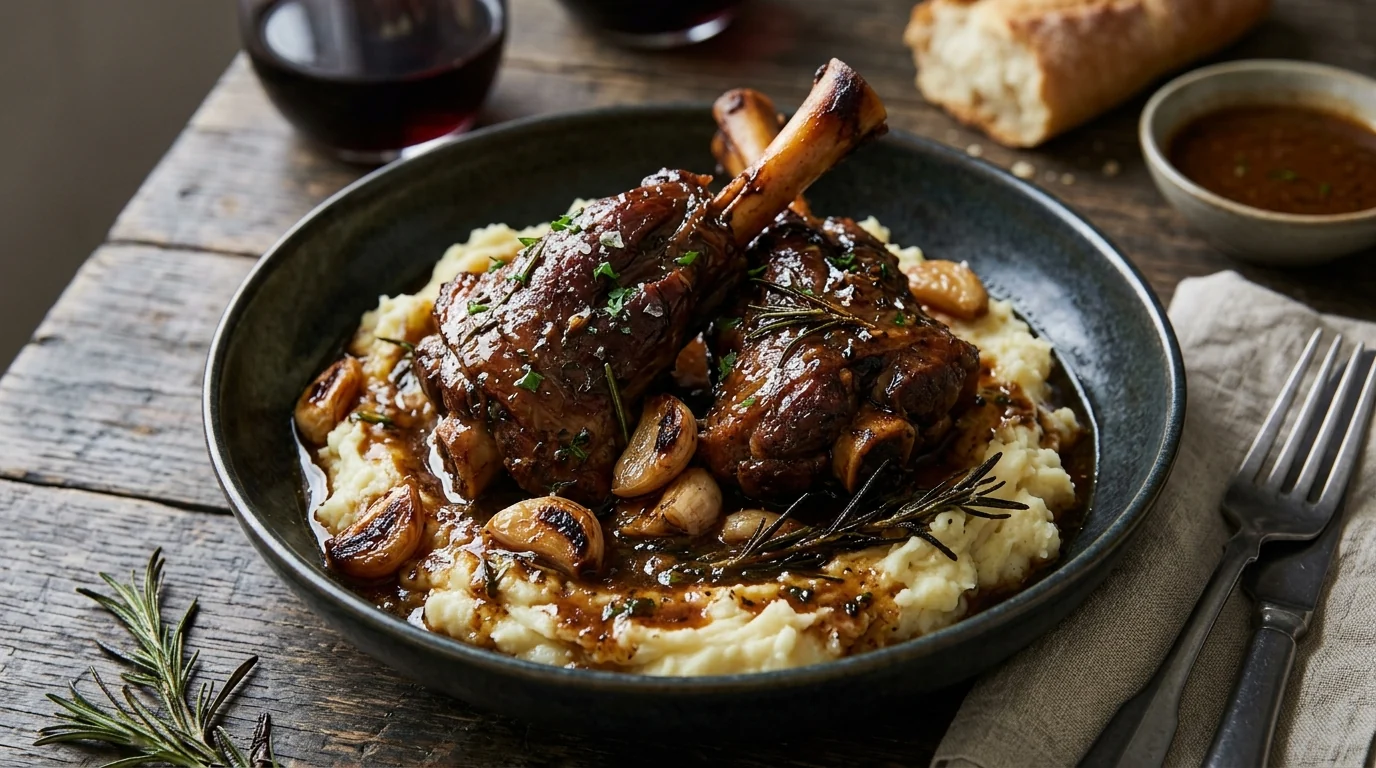
Lamb shanks are made for a low oven and a patient afternoon. Rosemary and garlic carry the savory flavor, red wine adds depth, and a little lemon zest helps the finished sauce taste lively rather than heavy.
Rather than relying on a long list of special ingredients, this approach pays attention to the details that matter: shanks are naturally connective-tissue-rich and reward slow moist heat. The recipe below gives a practical ingredient list, a clear cooking sequence, and the small adjustments that help it work in a real home kitchen.
The cooking idea behind Braised Lamb Shanks
Shanks are naturally connective-tissue-rich and reward slow moist heat. Low, moist heat gradually softens connective tissue while keeping the pot covered enough to limit evaporation. Browning first creates savory compounds on the meat and at the bottom of the pan; those browned bits dissolve into the cooking liquid and give gravy real flavor. For braised lamb shanks, that principle guides the steps that follow.
Rotate shanks halfway through if the upper portions sit above the braising liquid. That is especially relevant here because the way you handle the ingredients before the final cooking stage affects both flavor and texture. Read through the method once before beginning so you can anticipate the moments that need attention.
Ingredients for Braised Lamb Shanks
For braised lamb shanks, these are the quantities for one home-kitchen batch. Measure everything before you start, especially 4 lamb shanks. A different grain, flour, cut of meat or dairy product may change the result, so use the listed measurements on the first attempt.
- 4 lamb shanks
- 1 1/2 tsp salt
- 1 tsp pepper
- 2 tbsp olive oil
- 1 onion, diced
- 2 carrots, diced
- 6 garlic cloves
- 2 tbsp tomato paste
- 1 cup dry red wine
- 2 cups beef or lamb stock
- 3 rosemary sprigs
- 1 lemon, zest only
Shopping thoughtfully for Braised Lamb Shanks
When shopping for braised lamb shanks with garlic and rosemary sauce, focus first on the ingredients that define the dish rather than replacing several things at once. 4 lamb shanks is particularly worth checking for freshness and suitability, and 1 lemon should be measured according to the recipe instead of added automatically. A short written list prevents having to change the plan midway through cooking. If you need to substitute, choose something with a comparable amount of moisture, fat or acidity, depending on the role of the ingredient. A thick dairy product behaves differently from milk, and dried herbs are not interchangeable measure-for-measure with a large bundle of fresh greens. The goal is to preserve the balance, not to match every ingredient by name. Rotate shanks halfway through if the upper portions sit above the braising liquid. When a different ingredient changes cooking time or texture, use the doneness signals given in the instructions and pause to evaluate before adding more liquid or heat.
Choosing and preparing the ingredients
4 lamb shanks: For meat, cut and thickness affect the cooking time more than the package weight alone. If the method calls for browning, blot the surface first for better color. For braised lamb shanks, this ingredient joins 1 1/2 tsp salt in the final balance.
1 1/2 tsp salt: Seasoning should support the main ingredient rather than conceal it. Taste savory preparations before serving and add delicate spices with a light hand. For braised lamb shanks, this ingredient joins 1 tsp pepper in the final balance.
1 tsp pepper: Seasoning should support the main ingredient rather than conceal it. Taste savory preparations before serving and add delicate spices with a light hand. For braised lamb shanks, this ingredient joins 2 tbsp olive oil in the final balance.
2 tbsp olive oil: Fat carries flavor and helps with browning. If using butter over sustained heat, watch for dark flecks and lower the flame before they turn bitter. For braised lamb shanks, this ingredient joins 1 onion in the final balance.
1 onion: Give onions time to soften properly. When a recipe calls for golden onions, patient moderate heat builds a sweetness you cannot get from a brief high-heat sauté. For braised lamb shanks, this ingredient joins 2 carrots in the final balance.
2 carrots: Produce quality matters here: choose pieces that are firm, fragrant and free of spoilage. Wash and dry as needed, especially before roasting or sautéing. For braised lamb shanks, this ingredient joins 6 garlic cloves in the final balance.
6 garlic cloves: Garlic changes from sharp to mellow as it cooks. Add minced cloves later in a sauté to prevent scorching, or roast whole cloves for a sweeter, spreadable result. For braised lamb shanks, this ingredient joins 2 tbsp tomato paste in the final balance.
2 tbsp tomato paste: Measure this ingredient before cooking begins. Having the full quantity ready makes each stage more relaxed and reduces the chance of skipping it during a busy moment. For braised lamb shanks, this ingredient joins 1 cup dry red wine in the final balance.
1 cup dry red wine: An acidic ingredient adds contrast to rich, buttery or savory flavors. It should be noticeable enough to brighten the dish, not dominate it. For braised lamb shanks, this ingredient joins 2 cups beef or lamb stock in the final balance.
2 cups beef or lamb stock: For meat, cut and thickness affect the cooking time more than the package weight alone. If the method calls for browning, blot the surface first for better color. For braised lamb shanks, this ingredient joins 3 rosemary sprigs in the final balance.
3 rosemary sprigs: Fresh herbs bring aroma as much as flavor. Woody herbs withstand longer cooking, while delicate leafy herbs are best saved for finishing when possible. For braised lamb shanks, this ingredient joins 1 lemon in the final balance.
1 lemon: An acidic ingredient adds contrast to rich, buttery or savory flavors. It should be noticeable enough to brighten the dish, not dominate it. For braised lamb shanks, this ingredient joins 4 lamb shanks in the final balance.
How to make Braised Lamb Shanks
Have the pan or pot ready and ingredients prepared in the order used for braised lamb shanks. The first instruction is to heat oven to 325°F. Pat shanks dry, season and sear all sides in a heavy Dutch oven. Work through the stages without rushing; careful mixing, browning or resting will often matter more than saving a minute.
- 1
Heat oven to 325°F. Pat shanks dry, season and sear all sides in a heavy Dutch oven.
Allow the oven time to reach its set temperature before the pan goes in; an oven that is still warming changes both the browning and the timing. Position the rack so there is room above the dish and check that your baking vessel suits the heat. For braised lamb shanks with garlic and rosemary sauce, this stage sets up the next task: set lamb aside and sauté onion and carrots until golden.
- 2
Set lamb aside and sauté onion and carrots until golden.
Listen for a steady sizzle rather than violent sputtering. Color develops when surface moisture cooks away, so resist stirring or turning continuously. Work in batches if the ingredients would otherwise cover the skillet in a thick layer. With braised lamb shanks with garlic and rosemary sauce, the sequence matters because you will soon need to add garlic and tomato paste.
- 3
Add garlic and tomato paste, then deglaze with wine.
Move to the next stage only after checking how the ingredients look and feel. Keep the pan at a controlled heat, notice changes in aroma or texture, and adjust gently rather than trying to rush the process. For braised lamb shanks with garlic and rosemary sauce, check this before moving on to stir in stock and rosemary.
- 4
Stir in stock and rosemary, return shanks and cover.
Gather everything before combining it, particularly any ingredients that change texture when they sit. Work just until the mixture is even unless the instructions specifically call for kneading or extended beating; overworking delicate mixtures can make the result heavy. Notice this change carefully in braised lamb shanks with garlic and rosemary sauce before you braise about 2 1/2–3 hours until meat is tender but holds together.
- 5
Braise about 2 1/2–3 hours until meat is tender but holds together.
Treat the suggested time as a checkpoint, not an automatic finish line. The important question is whether the center has reached the intended texture or safe temperature. If only the top is coloring, cover loosely and allow the interior more time. In braised lamb shanks with garlic and rosemary sauce, the next move is to reduce the cooking liquid into a rich sauce and season; keeping the order steady helps.
- 6
Reduce the cooking liquid into a rich sauce and season.
Treat the suggested time as a checkpoint, not an automatic finish line. The important question is whether the center has reached the intended texture or safe temperature. If only the top is coloring, cover loosely and allow the interior more time. For braised lamb shanks with garlic and rosemary sauce, this stage sets up the next task: finish with a little lemon zest to brighten the braise.
- 7
Finish with a little lemon zest to brighten the braise.
Treat the suggested time as a checkpoint, not an automatic finish line. The important question is whether the center has reached the intended texture or safe temperature. If only the top is coloring, cover loosely and allow the interior more time. A final reminder for braised lamb shanks with garlic and rosemary sauce: rotate shanks halfway through if the upper portions sit above the braising liquid.
What to look for as it cooks
A properly braised piece should surrender to gentle pressure but retain enough shape to serve. Skim surface fat before reducing the juices, and add extra unsalted liquid whenever the pan risks drying out. This matters particularly for braised lamb shanks, where rotate shanks halfway through if the upper portions sit above the braising liquid.
Shanks are naturally connective-tissue-rich and reward slow moist heat. When deciding whether to move on, use smell, texture and appearance in combination with a thermometer for cooked meats. Note how the surface changes as moisture evaporates: a little concentrated flavor is welcome, but darkening too rapidly is a cue to lower the heat or shield the pan.
Common mistakes to avoid with Braised Lamb Shanks
If the meat still resists a fork, more covered time is usually the answer. Raising heat aggressively does not speed collagen softening gracefully; it can squeeze moisture from the fibers and reduce the sauce before the center is tender. With braised lamb shanks, shanks are naturally connective-tissue-rich and reward slow moist heat.
For braised lamb shanks, a useful final check is to finish with a little lemon zest to brighten the braise. That is the moment to notice whether the ingredients need slightly different seasoning, moisture or rest time, rather than making several changes at once. Adjust in small increments and recheck the result.
Adaptations that keep the flavor in balance
Substitute fresh thyme for part of the rosemary. This is a useful direction if you want to adjust the meal for what is already in the pantry, while keeping the main character of braised lamb shanks with garlic and rosemary sauce. Keep the braising liquid and covered cooking time in balance; a flavorful addition should not leave the pot dry or too salty.
For braised lamb shanks, changes should serve the main flavors rather than mask them. Keep 4 lamb shanks at the center of the plan; adjust strong seasonings cautiously and serve toppings separately when family preferences differ. That preserves the dish while giving everyone some flexibility.
What to serve alongside Braised Lamb Shanks
Creamy mashed potatoes, rice or sturdy bread are useful here because they catch the savory cooking juices. If you are making a wider family spread, consider herb-roasted whole chicken with garlic pan gravy as another recipe in the same collection. The two dishes can inspire a menu even if you choose to prepare them on different occasions.
To serve braised lamb shanks without stress, choose a platter or bowl that fits the final texture. Gather utensils before the final step, follow the finishing instruction to finish with a little lemon zest to brighten the braise, and bring accompaniments to the table at the appropriate temperature. It is an easy way to make serving smoother.
Make-ahead planning, leftovers and reheating
For braised lamb shanks, cool leftovers promptly and refrigerate in shallow covered containers. Most cooked meat dishes keep for 3–4 days in the refrigerator, and reheating gently in their sauce helps them stay moist.
Rotate shanks halfway through if the upper portions sit above the braising liquid. Planning ahead for this recipe works best when you separate tasks that hold well from finishing steps that need immediate attention. Wash and chop sturdy vegetables, measure dry ingredients, or prepare components of sauces early; save crisp toppings, fresh herbs and final glazing until near serving time. Label stored portions with the preparation date.
Questions about making Braised Lamb Shanks
How do I know when braised lamb shanks is ready?
For braised lamb shanks, the most dependable clue is the finished texture: A properly braised piece should surrender to gentle pressure but retain enough shape to serve. Skim surface fat before reducing the juices, and add extra unsalted liquid whenever the pan risks drying out. Rotate shanks halfway through if the upper portions sit above the braising liquid. Use a food thermometer for meat and the visual signals described in the method for baked dishes.
Can I prepare part of the recipe the day before?
Yes, many prep tasks can be done ahead. Rotate shanks halfway through if the upper portions sit above the braising liquid. Hold perishable ingredients refrigerated, follow the sequence when cooking, and add fresh or crispy toppings close to serving.
What can I change without losing the character of the dish?
Substitute fresh thyme for part of the rosemary. For braised lamb shanks, make one adjustment at a time and keep the balance of 4 lamb shanks and 1 1/2 tsp salt in mind.
What should I do if the finished texture seems wrong?
For braised lamb shanks, If the meat still resists a fork, more covered time is usually the answer. Raising heat aggressively does not speed collagen softening gracefully; it can squeeze moisture from the fibers and reduce the sauce before the center is tender. Shanks are naturally connective-tissue-rich and reward slow moist heat. Check heat and moisture before making several changes at once.
How should I serve and store leftovers?
For braised lamb shanks, Creamy mashed potatoes, rice or sturdy bread are useful here because they catch the savory cooking juices. Cool leftovers promptly and refrigerate in shallow covered containers. Most cooked meat dishes keep for 3–4 days in the refrigerator, and reheating gently in their sauce helps them stay moist.
A meal worth bringing to the table
Braised Lamb Shanks with Garlic and Rosemary Sauce is a reminder that classic home cooking depends less on complicated tricks than on doing a few things carefully. Take the time to develop flavor, watch the texture, and serve it in the way that suits your table. The method is a starting point for a satisfying family meal, not a demand for perfection.
Looking for something to go alongside this dish? Find more ideas in Sunday Dinners.